
Rodent exclusion · Los Angeles
Rodent exclusion that seals entry points for good
15+ crew members serving Los Angeles residential and commercial properties.
- Every entry point mapped first
- Sealed with gnaw-rated materials
- Written record before we leave
Same-week inspections
Most Los Angeles properties get on the schedule within days. With 15+ field crew, your appointment isn't waiting on one technician's calendar.
15+
Crew
100%
In-house
Free
Consultation
Inspection first
We map every confirmed entry point before a single seal goes in.
Sealed permanently
Materials rated to hold under sustained gnaw pressure. No trap-and-done.
Documented work
A written record of what was found, where, and what closed it.
Traps remove rodents. Sealing keeps them out.
Residential or commercial. One entry point or forty.
Rodent exclusion is the practice of physically closing every opening a rodent uses to enter your home.
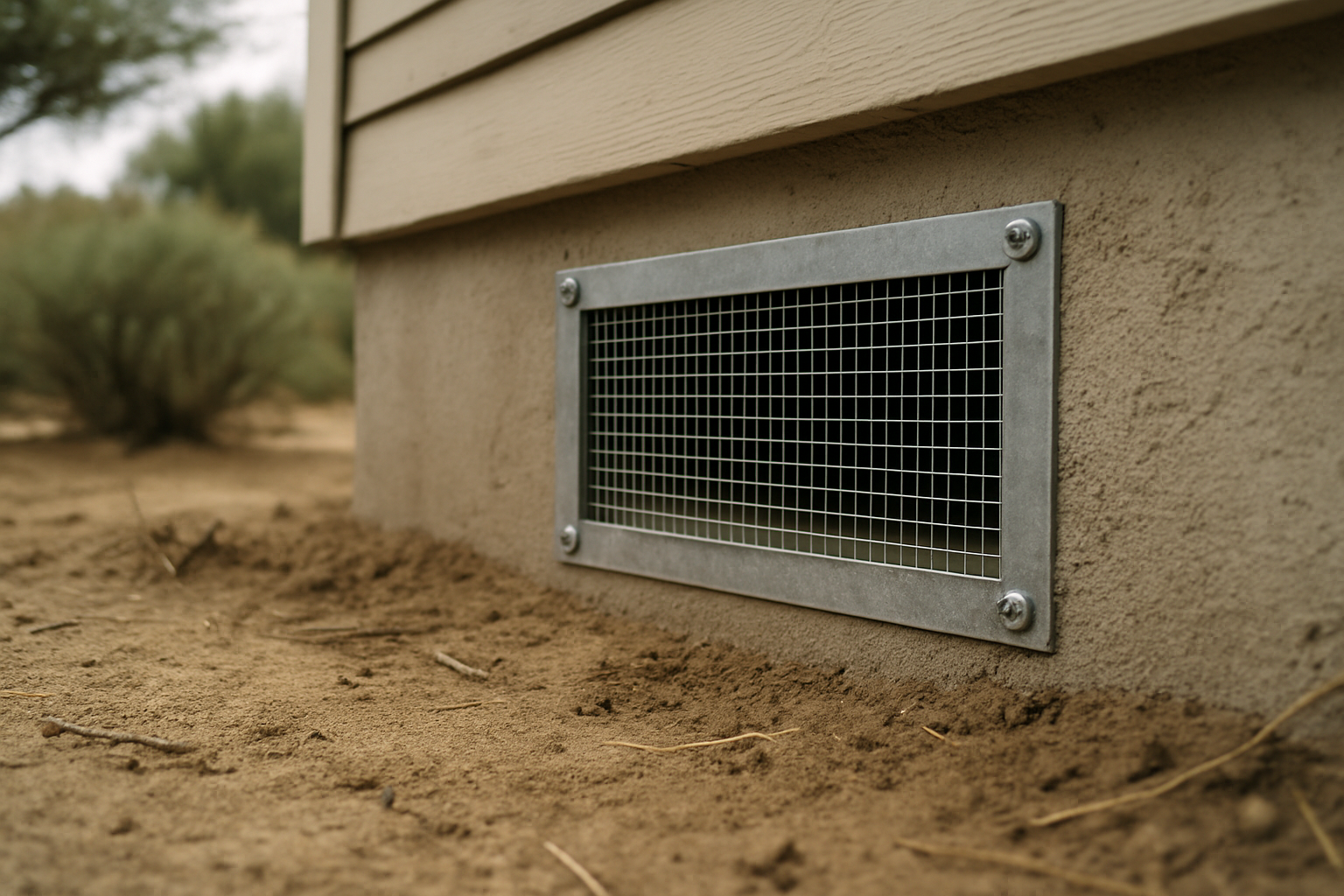
Trapping works on the animals already inside. It does nothing to the gap in your fascia board. It does nothing to the open bird block under your Spanish tile. It does not close the deteriorated screen on your foundation vent.
Los Angeles has no off-season for rodent activity. Roof rats, Rattus rattus, the dominant species here, travel along utility lines and citrus tree branches year-round. They reach your roofline and test every gap they find. When one works, they use it repeatedly. When that animal is trapped, another finds the same opening within weeks.
That cycle ends when the opening is sealed.
Rodent R Us leads every job with physical exclusion, meaning we find every entry point first, then close it permanently using materials rated to hold under sustained gnaw pressure. No single product applied everywhere. No trap-and-done approach.
What happens when a homeowner hears scratching above the ceiling
Scratching above the bedroom ceiling at night is almost always a roof rat in the attic, and it has a specific solution.
A homeowner hears something moving directly overhead, usually around 10 or 11 PM. It has been going on for weeks. They have already tried a few things, steel wool around the dryer vent, foam near the garage. The scratching kept coming back.
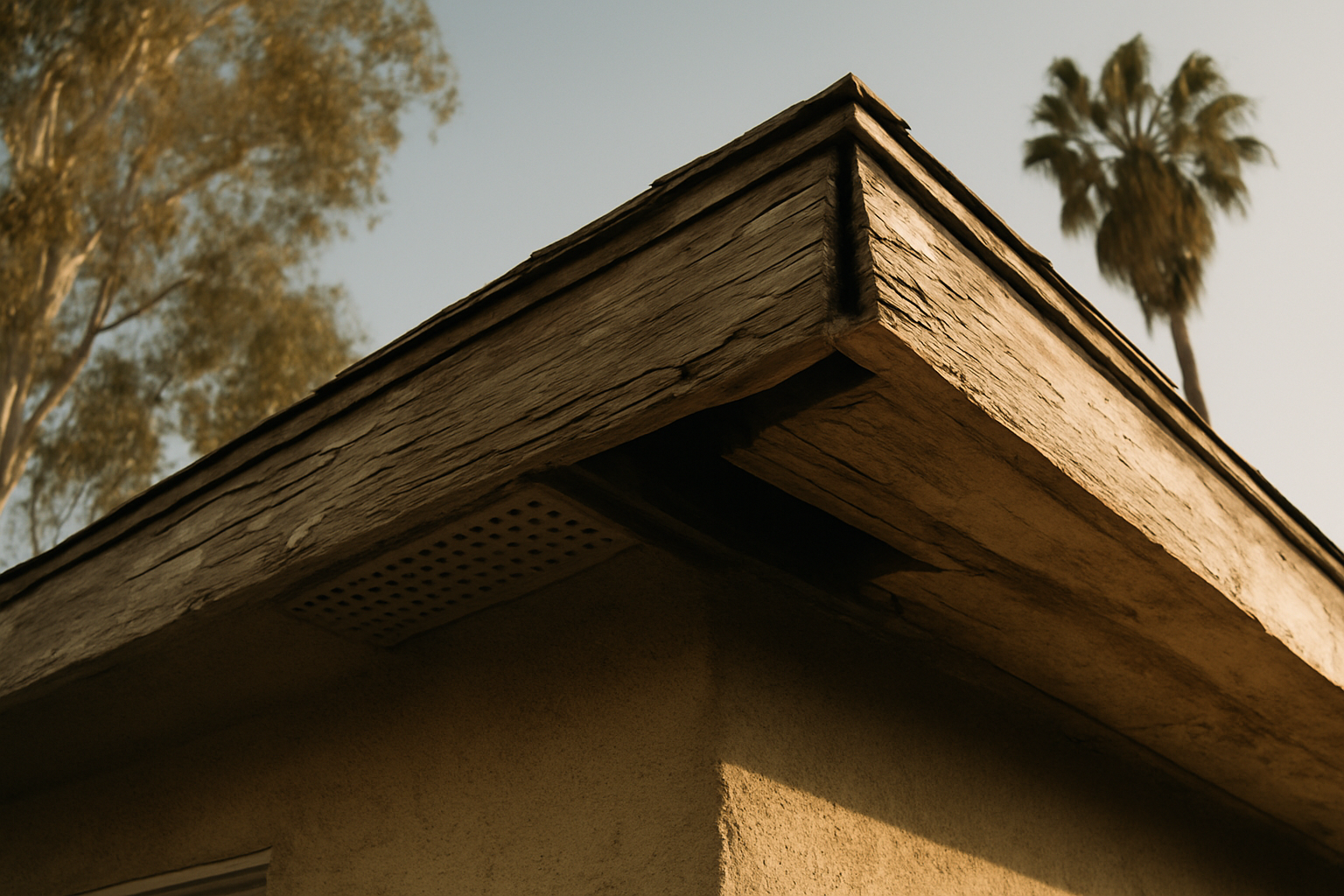
When the crew gets to the property, the attic access almost always shows the same story. Nesting material pushed into the insulation. Grease trails, the dark oily smear marks rodents leave along their regular paths, running along the attic floor perimeter. Entry points up high: an open soffit vent, a gap where the fascia warped away from the roofline, a bird block that has been open since the house was built.
The steel wool and foam near the dryer vent were not wrong. They were just not where the animal was getting in.
A roof rat in Los Angeles enters from above. Ground-level sealing addresses a completely different species in a completely different city.
We document every confirmed entry point before a single seal goes in. We remove the active population from the attic first. Then we close every opening at the roofline, the soffit, and anywhere a branch or utility line approaches the structure. After that, the attic gets assessed, nesting zones noted, insulation condition checked.
One job. One written record of what was found and what was done.
From first inspection to final seal
Every Rodent R Us job follows the same sequence: inspection before sealing, removal before closing, documentation before departure.
What gets checked
The first step is a full-property inspection. We check the attic, the crawl space, the roofline, and the exterior perimeter. We look for active signs, droppings, gnaw marks, grease trails, urine staining, and map every confirmed entry point by location.
For roof rat activity, that inspection goes to roofline elevation. Soffit vents, fascia gaps, bird blocks, and the points where utility lines or tree branches touch the structure. Ground-level inspection alone misses this species' primary entry zones.
Species are identified from the evidence. Roof rat dropping patterns differ from Norway rat evidence. Mouse evidence is different still. The species determines where we look and what we seal.
What gets sealed
Active rodent removal happens first. Trapping runs until we have confirmed the interior population has been addressed. Then sealing begins. Closing a building with animals still inside is containment, not exclusion. We do not work that way.
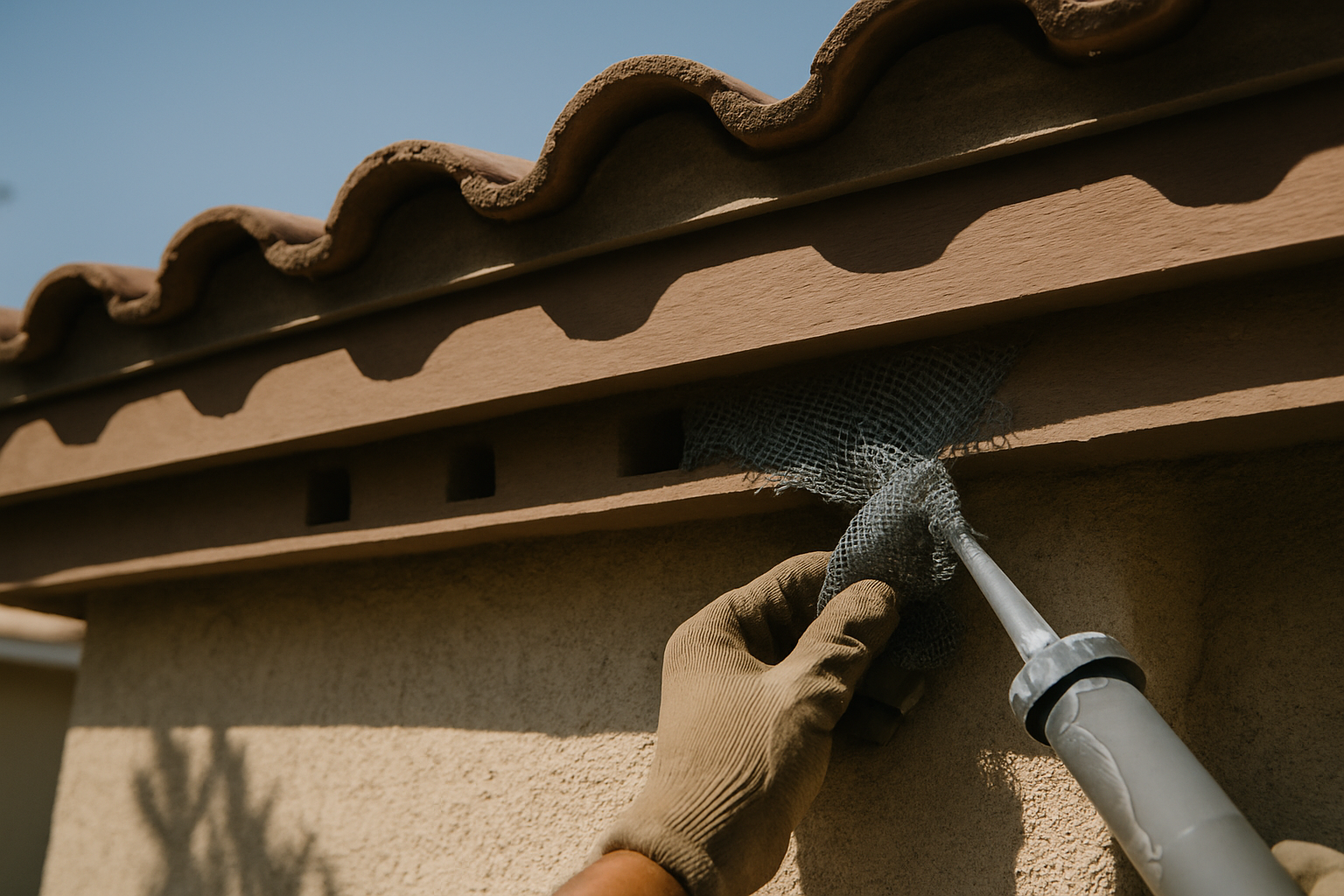
Each entry point gets the correct material for its location, hardware cloth, Xcluder fabric, copper mesh, or concrete patching depending on gap size, surface type, and exposure.
For commercial properties, work is coordinated to limit operational disruption. Crew deployment is sized to the property. With 15 or more crew members available, a restaurant perimeter or multi-unit building gets full coverage in one visit.
What you receive
After sealing, every point on the entry map is physically re-checked. You receive a written record, entry points sealed, materials applied, attic or crawl space condition, and any conditions observed outside the immediate exclusion scope.
For retainer clients, that record becomes the baseline for the next scheduled inspection visit. Seal integrity is checked on every return. New gaps found during a retainer visit are closed the same day.
New gaps open from settling, weathering, and seismic movement. We check our own work on a schedule so those get found and closed before a rodent finds them first.
Materials and standards
Our standard is straightforward: every confirmed entry point gets closed before we leave, and every job is documented.
- Commercial-grade materials only. Hardware cloth for vents and larger openings. Xcluder fabric, a stainless steel and poly-fiber fill, for pipe gaps and irregular voids. Copper mesh for smaller exterior gaps where moisture would corrode galvanized materials. Concrete patching for foundation cracks and block wall voids.
- Material matched to location. A pipe penetration in a wet zone gets a different treatment than a fascia gap on a dry roofline. One product does not go everywhere.
- No gap treated as minor. A quarter-inch opening at ground level and a quarter-inch gap behind a bird block are the same size. One is easier to reach. Both let a rodent through.
- Written findings on every job. The entry point map, materials used, zones assessed, not a verbal summary at the curb.
- Active population addressed before sealing. Trapping runs until activity clears. Then the structure is sealed.
- The entry map is yours in writing. You see what we found and where it is, before any work begins.
Every gap. Every zone. Every time.
Rodent exclusion, sealing & proofing
Rodent exclusion services in Los Angeles
Physical exclusion that finds and closes every entry point permanently.
Entry point sealing & rodent-proof repairs
Commercial-grade materials matched to each gap and surface.
Rodent retainer & maintenance plans
Scheduled visits that re-check seal integrity and close new gaps.
Attic rodent exclusion & cleanup
Rats in your attic? Removal, sealing, and cleanup in one job.
Roof rat control in Los Angeles
Targeted control for LA's dominant species, Rattus rattus.
Crawl space & foundation rodent sealing
Foundation vents, cracks, and block wall voids closed for good.
Rodent inspection & property assessment
Full-property inspection with a written entry point map.
Dead rodent removal & odor elimination
Locate, remove, and neutralize odor at the source.
Rat dropping cleanup & sanitization
Safe cleanup and sanitization of contaminated zones.
Commercial rodent exclusion
Full coverage for restaurants and multi-unit buildings in one visit.
Garage & perimeter rodent proofing
Perimeter sealing that shuts down ground-level access.
Pre-purchase rodent inspection
For LA home buyers who want the full picture before closing.
Post-wildfire rodent control
Managing displaced rodent pressure after wildfire events.
Landlord rodent compliance & rental exclusion
California rental property exclusion and compliance support.
Rodent exclusion cost in Los Angeles
What drives pricing on an exclusion job in LA.
We work in these neighborhoods every week
Los Angeles roof rat problems are specific to this city's trees, architecture, and housing stock, and we work inside that context every day.
Our crew dispatches from 5336 Mecca Ave in Tarzana, the geographic center of the western San Fernando Valley. The neighborhoods we serve regularly have specific, observable entry conditions:
Mature citrus and avocado trees overhanging rooflines in Encino, Woodland Hills, and Tarzana, each one a travel path for roof rats reaching your eave.
Spanish tile construction throughout the Valley and into Calabasas, the bird block gap beneath the tile is one of the most exploited entry points we find on any job.
1950s and 1960s construction in Reseda, Canoga Park, and Van Nuys, foundation vents on these homes are often original, which means the screens are decades past their useful life.
Canyon-adjacent lots in West Hills and Woodland Hills, these properties sit on the urban-wildland interface where rodent populations from Topanga State Park routinely push into residential structures.
We know what to look for on a Los Angeles property because we work in these communities every week.
Los Angeles communities we reach from Tarzana
Rodent R Us serves residential and commercial properties across Los Angeles from our Tarzana base.
Our crew covers the full western San Fernando Valley and beyond, including Encino, Woodland Hills, Calabasas, Reseda, Canoga Park, Van Nuys, West Hills, Sherman Oaks, and North Hollywood. We also reach westside and central Los Angeles communities for commercial and specialty service calls.
- Encino
- Woodland Hills
- Calabasas
- Reseda
- Canoga Park
- Van Nuys
- West Hills
- Sherman Oaks
- North Hollywood
Call (323) 805-0173 or email in**@*******us.com to confirm we serve your area.
Ready to schedule a property assessment?
Tell us your property type and where you first found evidence. We will confirm your earliest available inspection window.
Our crew dispatches from Tarzana. With 15 or more field members available, appointments are not held to one technician's calendar, and same-week scheduling is available for most LA properties.
You leave the inspection with a written entry point map: a specific record of what was found, where it is, and what it takes to close it.
Free consultation, no obligation · in**@*******us.com